Tuesday, March 15, 2022

If your child really is talented, save your energy

 I almost never post here any more because I've been crazy busy, running the Growing Math Project but today I was answering an email from a parent of a talented little athlete and I thought my ideas might be of interest to other parents and coaches as well.

Dear Parent, 


From loads of experience seeing many, many kids - she is nine years old and kids pick up on what their parents think is good, right up until they become teenagers and think you are out to ruin their lives. Most likely, your child is working hard at their sport because she believes you value it.


I used to think it was a negative to start early but I started in my very unscientific survey asking people I ran into who were world or Olympic gold or silver medalists and there was zero correlation with how young they started from age 3- 12.  Very, very few started after 14 but I ran into people who started at 3, 5, 7, 11, 12 - there didn't seem to be any advantage or disadvantage in starting earlier. 

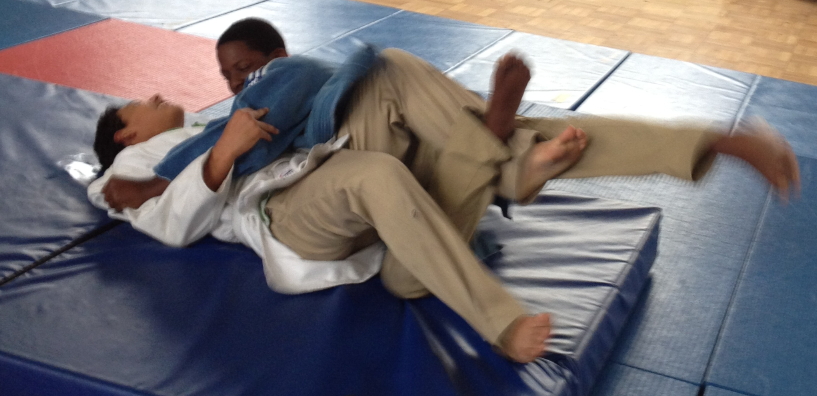
My 7- or 8- or 9-year-old child is an extremely talented judo player / martial artist. What should I do?

My 5 pieces of advice


1. Kids can burn out and parents can, too. Save your time and money for when she really needs to travel for competitions and training. I would not be driving an hour away for a child at 9. Save your energy because if she is really good, by the time she is 14, you want to have some left. When Ronda was 14-16 I was taking her to 9 practices a week, and that was on top of her going to school and me working and having 3 other kids. 

2. For a child from 9-12, if they can stay in good condition doing anything, they will be ahead of the game at 13-14 because most kids aren't in very good shape. Ronda was a swimmer from age 5-10 and then decided she didn't want to do it any more and started judo. Julia (my youngest) was in judo from age 4-11 and switched to soccer. Whatever she likes to do that is good exercise, do that, whether it is running in the park, swimming, playing soccer. Put her in a sport that involves running or swimming. It doesn't matter whether it is gymnastics or basketball or water polo.

3. Make practice fun, even the boring parts. Ronda hated running and you need to have good conditioning for judo. She did not mind conditioning drills in judo where you sprint between partners and throw them, so we did more of that. We did a lot of games  like tug of war, that make you work hard and build the grip and muscles you need for judo but are still fun. 

4. When you go to training camps, seminars or tournaments, make sure there is fun afterwards - team dinners, going to the aquarium or amusement parks - something your child likes to do.

5. A very wise coach once said, "You can buy your child skills but you can't buy them talent." Driving your child two hours round-trip to practice at the best gym in town might give them more skills than the other child has, but it won't make them more talented. Judo is not gymnastics. They aren't going to peak at 13. If you and your child like that club and you have the time, and it doesn't take you away from your spouse, other children and things you want to do, go for it. 

In the end, your daughter may decide she'd rather switch to cross-country or soccer or ballet, or she may stick with judo / BJJ/ MMA to become a world champion. Either way, she'll have had a healthy, happy childhood and you won't be overly stressed. What more could one ask?

Sunday, March 7, 2021

What makes a good guest instructor?

 We'll be starting Gompers Judo practices up again in the fall when school is back in session. My plan for the first few weeks is getting some conditioning done, falls and basic matwork. After that, we'll be having invited guest instructors come in hopefully weekly.


There are three reasons for guest instructors:

  1. I travel a lot and cannot commit to more than one day per week past the first few weeks of the semester. My day job is making educational games and, as you can imagine, remote learning has made our business skyrocket.  Also why I have not been blogging lately.
  2. I don't know everything. Yes, I am sure that shocks you. I'm very good at matwork. However, my knees are shot and I am old and slower than I used to be. It is great to have a young person come in to teach left uchi mata or tai otoshi. Also, I am terrible at foot sweeps.
  3. It's good for students to have multiple role models and connections. Maybe this is the person who will give them advice on going into the military or pursuing a career in engineering.

So, what makes a good guest instructor?

First of all, you need to know some judo. Even that is not 100% required. If you were excellent at conditioning, I might invite you a time or two. At a minimum, you'd need to know something that would help kids in judo. 

However, you definitely don't need to be a world champion. These will be students who have had from four weeks to maybe two years of judo. They need to learn o soto gari and kami shiho gatame. 

Secondly, you need to be a good teacher. Our Gompers Judo students tend to be very well-behaved and polite. That doesn't mean we are going to make them sit there and listen to someone deathly boring after they have sat in class for six hours. Even if you are extremely knowledgeable, you need to have an active class. After all, these are middle school kids. 

This goes with being a good teacher, but you need to be respectful to our students. By that, I mean you can't swear at them, insult them, humiliate them, hit them or mistreat them in any way. You'd think I wouldn't have to say that but visiting other clubs tells me that I do. Having students who are slacking off or do push-ups, run or generally not tolerating less than good behavior is fine. Not being disrespectful doesn't mean your class runs wild. Again, you'd think I wouldn't have to say this but ...

Third, for our particular program, you need to be someone who is a good role model outside of judo. I have invited everyone from a project manager in aerospace to Los Angeles sheriff's officers to college students. You don't have to speak about your career but the students may ask you. For many students, judo is a chance to meet people outside of their neighborhood. Other judo programs have a lot more advantaged students and this is not an issue for them.

Fourth, again for our particular program, you need to be willing to teach for free or a very modest fee because we want to spend most of our money directly on the students, for water, after-school snacks, weekend judo camps. Again, other programs have more money and it is not an issue for them. Also, we are very fortunate that we are in an area where there are a lot of black belts in judo. If I was in say, the middle of Missouri or Montana, I might feel it was a lot to ask someone to drive 5 hours each way to teach at my program for free. In our case, though, a person could be driving across town and then having a beer with me afterward while they wait for traffic to die down, so it is not as unreasonable.

So, if I call and ask you when I am putting the schedule together for this fall, please say, "Yes" and give me some dates you'd be available.

I have more random thoughts on this but I need to get back to work.

Here is my company blog that has nothing to do with judo. I write about making games, math and random stuff.

Sunday, June 28, 2020

The Biggest Mistake I Made as a Judo Player

The biggest mistake I made as a judo player was not a technical one  ....

... and I did not realize I was making such a stupid mistake until I was in my fifties. For someone who has a reputation for being smart, that is a really long time to make the same mistake. Seriously, it is embarrassing to say this and I am writing this post to save some of you who might be making the same mistake now.

My biggest mistake may have led to a lot of my success, but I was wrong, in the end

So what was this, you might be wondering. It’s that I judged people simply based on how good they were at judo, how good of a competitor or how good of a coach. I never particularly cared if someone was a good referee, only if they were an honest one. My attitude about referees was “I will beat this person up and make you give me the win.”

That’s a story for another day.

Today’s story is about all the missed opportunities I had for getting to know amazing people better.

When I was competing, my biggest priority in life was winning. If I met someone who was a judo player who was also a physician, an engineer, an army Ranger or the mother of ten children, I was solely interested in how they could help me get better at judo. Yes, I had a job and I did my best to learn whatever language I was supposed to be programming in at the moment, but once I left the office my only focus was on winning.

You are studying how a new protein might reduce the prevalence of early onset Alzheimer’s ? That’s nice, can you help me improve my seoi nage? No? Next!
Dawn and I were great friends
If someone was a terrific judo player or coach, I spent as much time around them as possible so I could learn and improve. If they were just good or even so-so, I really didn’t spend much time with them because I was focused on winning.

Dawn Beers and I were great friends, but would that have still been the case if she was not a talented judo player and a great training partner?  Now, yes. Back then, I am embarrassed to say the answer is, "Probably not."

Maybe that laser focus on winning helped me be best in the world. Probably it did.

Then, I quit competing.

When you have children, they need to be your number one priority.

I thought about quitting when Maria, my oldest was born. I talked to my brother about it, who had children a little older than mine. He told me that if I quit at this point, I’d have to be almost inhuman to never, ever look at her and think ,

“If it wasn’t for you, I could have been world champion. I gave this up for YOU!”

That’s a pretty big burden to put on a tiny human.

Shortly after she was two, I won the world championships, retired from competition and went on to get a Ph.D. I had two more children, started a career as a professor, then founded a company, had another child (there were a couple of husbands in there, I still have one of them).. I would drop by the local judo club when I lived in Jamestown or do a clinic every once in a while. Except for few close friends, I never really talked to anyone from judo.

Then, my daughter, Ronda started judo


I knew how to help her win. I took her to different clubs that I thought could help her, where they had good competitors or good coaches. I really did not pay that attention to anything any of them did outside of judo, not the other competitors, parents or coaches. I tried to organize events and raise money for activities that would benefit our local teams, and later our national teams, because that’s what you do when you are the parent of an athlete in a sport. Certainly the camps and trips that I helped organize and fund benefited everyone who participated, not just Ronda.

Still, when I met people in judo, my focus was on how I could help her. You founded a company that made 9 jillion dollars? Good. Is your kid a really good athlete who can be Ronda’s training partner? No? He cries when he gets thrown but he’s super smart and got into MIT at 15. Really? That’s awesome. See ya around.

You would think that I would have gotten smarter over the years, but not so much

It wasn’t that I had a big mid-life crisis epiphany at 50 but more that I was not really doing anything with judo that focused on winning so much. Ronda was off in a different direction and I was coaching some great kids at Gompers Middle School. When we managed to raise a few thousand dollars, I would not use it to send one kid on our European tour but rather to take a dozen kids on a road trip to practice in Nevada and Utah, hike in the mountains and see a rodeo. I got to know Jose Gonzalez well, who is still a green belt because he won’t learn kata but who has been the heart of the Gompers Judo program since day one.
Teaching matwork at Gompers Judo's first gym

I met Brian Money, from Riverside Police Youth Judo club, speaking of heart, who also runs a special needs judo program.

I got to know Roy Hash better, who is a real Captain America army Ranger with an amazing history.

I heard Hal Sharp tell stories about how he talked his wife into marrying him, about being an accountant in post- World War II Japan.

I got to hear Jerry Hays and Joe Ciokon’s stories about the navy and Hayward Nishioka’s philosophy on life.

The list could go on and on. Sitting here, I am just shaking my head at all of the amazing people I met who I could have gotten to know better but didn’t because they weren’t ‘good enough at judo’.

That’s not everybody, of course. Some of you aren’t all that good at judo and you’re stupid assholes to boot. I’m glad I don’t know you better. You know who you are.

Here’s what I should have done differently

In all those hours-long sessions where I sat around with other players or coaches and talked about nothing but judo, I should have turned to some of those people on the sidelines. I should have asked at some point,
 “So, you have a life outside of practice, what is it?” 
“You’re studying orangutans in Madagascar? That sounds really cool. Tell me about it.”

If I’d had those conversations, I would be a smarter person now, have more friends and know things like whether or not there are actually orangutans in Madagascar


Sunday, April 26, 2020

Starting Back Up Your Martial Arts Program Today

I've been thinking a lot about those gym owners and instructors who are wanting to re-open for many reasons, whether it is
 a. they miss their students,
 b. they miss training,
 c. they need the money,
 d. they want to get their team in shape for tournaments
e. All of the above

Here are some ideas you can try, TODAY, that I think comply with health requirements.

Family Conditioning

If most families are like mine, they have been getting a lot less exercise the past couple of months. Everyone - mom, dad, kids - could do with a little conditioning.

Invite 2-3 families, no more than 6 people

With one instructor, that will give you a group of no more than 7. Everyone should wear running shoes, comfortable clothes and bring a towel, blanket or yoga mat from home as well as their own water bottle. Schedule 30 minute sessions the first week or two then gradually increase to 45 minutes. If you do multiple sessions in a day, this gives the first group 15-30 minutes to be out of there before the next group comes.

Meet  OUTSIDE.

I know some of you live in places where you have a farm or a big backyard so that might do. In Santa Monica, the city parks are open but they tend to be crowded in the evenings and on weekends - by this, I mean there are family groups every 20 feet or so.

Work out as a family

If necessary, put the kids in front so they are not embarrassing the parents by watching them. If you have small children, you may want them next to the parent.  Make sure you have 6 feet between each family. Start with stretches, then simple exercises anyone can do - jogging in place, laying on their back doing bicycle kicks. The middle of your practice should be a little more difficult, something like circuits.

Here is an example of a circuit. See below how to modify it

  • Step-ups (bench or steps)  20 reps (10 each leg)
  • Clap push-ups x 15
  • Squat thrust (or burpees) x 15 reps
  • Plyo Jump ups to bench x 10 reps (jumps which push off of both feet simultaneously from a squatting position)
  • Bent knee sit ups x 25 reps

This is a plyo jump

You can see above that Julia and Ronda are just using a wall at the park. This was before we were quarantined, but also, if you have people from the same household you don't need to maintain the 6 feet distance.

You can also use a bench. If your park doesn't have any walls or benches or you are in your backyard, steps work perfectly fine, too. If you have some 2-inch think boards and nails around you can even make a box for jumping. Even I have done that and I have the handicraft skills of a squirrel.

Even though you might think a milk crate would work fine for young children, I would not recommend it because although it will hold their weight, if they end up jumping on the edge instead of in the middle - a fair possibility with little kids - it may tip over and they'll fall backward.

Once you have finished a circuit, everyone rests for two minutes and you do it again. Do three circuits and then do some stretches to cool down.

Modifying circuits

For more serious players, have them bring their own dumbbells and do the step ups and jumps holding 5-15 lb dumbbells in each hand. For people who are just getting into shape they can do regular push-up instead of the clap push-ups. Also, they can't do all three circuits or all of the reps, that's fine.

Modify workouts to suit each group

This is a workout I would do to start but you know your club / gym better than I do. Modify the exercises to suit your families.

Don't I know that martial arts are contact sports?

Yes, yes I do. I also know that people often lose, get injured or make mistakes because they are out of shape and got winded or tired. Do your students a favor by helping them get gradually back into shape.

Why do this as a family?

There are several reasons to include whole families. First of all, everyone needs to get out of the house. Secondly, the distance requirements are between households because the reasonable assumption is that if someone lives with you, they probably already infected you if they are ill. Third, most martial arts programs are social. People know each other's kids, spouses. It gives them a chance to socialize and see each other.

As a parent and coach, I feel very strongly that parents often devote their time to their children and don't take care of themselves enough. Working out as a family helps the parents as well as the children. Exercise is good for you. Since the parents are probably driving their children to wherever you are anyway, they may as well be part of it.

Stress as heavily as you possibly can, this is NOT a competition. This is like when college or pro teams get back together pre-season. You are starting to get back into shape so you can get back on the mat, back to your pre-quarantine gym sessions or whatever.

Sign people up for a month of "semi-personal training"

If it were me, I would sign up groups for a month or so. Ten sessions with your family. If they do 2 sessions a week for 5 weeks, they will notice a difference.

I have a lot more ideas including for athlete conditioning, but I really have to get back to work.

My Day Job

Learning at home? Get free games and apps to teach math, social studies, Spanish and English for students in grades 3- 8.

Get free games while US schools are closed, from 7 Generation Games


Friday, November 29, 2019

My Life: Not on Instagram

I lead the opposite of an Instagram life.


That’s not to say it’s boring because it’s not. So far this year, I’ve been in five countries, nine states and I’ve lost track of the number of cities. I’m also not opposed to Instagram. I do have an account and I post on it most days. No, what I mean is that while most people are posting things to make their life look more interesting than it is, I often forget or don’t have time to post because I’m too busy doing interesting things.

Been so many places, I couldn't remember where this was at first.
California, in the mountains.

Where I’ve been lately

Since the last blog post, a dozen of us from Gompers Judo attended Judo Con - which was GREAT. There were judo instructors and coaches from all over the country learning everything from teaching judo to children with special needs to jump roping for conditioning in martial arts to character development in youth sports. Every one of the presenters was my favorite.


I’ve gotten back to teaching at Gompers regularly. Thanks a million for the judo gi donations. It’s hard to believe that Gompers Judo has been in existence ten years now. We've had gis donated a couple of times previously but over a decade, things wear out.

It’s looking like Judo Con will be on the East Coast next year so next on my agenda is raising money for a dozen plane tickets to get some kids there.


I’ve also gone to Washington, D.C. twice because I was selected as an AARP Purpose Prize Fellow - which was also amazing.


 It is for people who have led a “purpose driven life” and have a noteworthy “second act”.  Many award winners founded charities, like The Pink Fund which pays the non-medical bills for women who have cancer (what do you do if you can’t work for 3 months?) , Starting Right Now which provides homes, counseling and academic support for homeless youth. I founded 7 Generation Games, which is not a charity but has helped 20,000 kids get better at math and English.


Along with that, I’ve been a speaker at the South Dakota Indian Education Association conference, National Indian Education Association Conference ...

Minneapolis: National Indian Education Association
Language and Learning Conference in Merritt, British Columbia, where I also had the opportunity to attend a joint workout of the Nicola Valley Muay Thai , then head to Vancouver to participate in a self-defense workshop offered by Protect Our People.


I put up another More Than Ordinary podcast, this one with author, long-time judo coach and budding YouTube celebrity, Steve Scott.

So, I have literally been coast to coast, from Boston, where I had a couple of meetings on our new Crossroads games and also got to see Julia play in her final season of soccer.


In case you haven’t been keeping up ...


This spring I was in Melbourne, Australia for a week and I started out the beginning of the year in Santiago, Chile.

There have also been a couple of short trips to Mexico.

Oh, and I did a month-long road trip with my husband.
Driving through South Dakota

Two big things I learned this year

Just say, “Yes”. 

From going to Melbourne to the Nicola Valley to teaching summer school at Spirit Lake, I did a lot of things this year that were only tangentially related to what could be considered our "core business" at 7 Generation Games. I did not regret a single one of them.

I've learned that life is far less predictable than we'd like to believe. I often think back to the fact that my husband died when he was seven years younger than I am now.  I absolutely guarantee you that if you went back to any of the teachers I had in junior high and high school and told them I was doing life in prison now none of them would be surprised. But I'm not. Not yet, anyway.

This isn't to say that you should spend your days lying on the beach or scrolling through Twitter on your phone because, "Life is unpredictable, why bother?"

What I mean is that you should not get so laser focused that you lose sight of opportunities that might not come again. That's why I went to Chile, why I started 7 Generation Games, why I do a lot of things.

Some people worry about dying without a full bank account. I think a bigger worry should be about dying full of regrets. 

NOTHING is more important than associating with good people. Nothing. 

 Explaining one of her business decisions, Carly Fiorina said,

"Once you sell your soul, no one can buy it back for you."

People make this mistake in judo, in other martial arts or sports and in business. Because someone has money to invest or donate, is good at a sport, is a successful coach, their character flaws are overlooked. Sure, I wouldn't trust Bob alone with my teenage daughter or my wallet, yes he is physically abusive to athletes and overly controlling but look at ....

I'm not looking at jack shit.

If Bob isn't a good person, if he isn't honest, trustworthy, brave - cut him out of your life. This lesson took me too long to learn and I am never, never going to forget it. I don't care if Bob's judo is so great he could defeat the entire U.S. Marine Corps single-handed. It doesn't matter how much money Bob has. Please don't make me vomit by asking me to think of how much good could be done for the athletes/ children/ investors with Bob's money.

Good people attract other good people. Bad people repel them.

If I know Bob is a lying, cheating douchebag and I see you hanging out with Bob, I'm less likely to have anything to do with you. If I don't know you from a hole in the wall and I see you with Bob and your cousin over there is hanging out with Sally B. Goode, I'm going to go see what Sally and your cousin are up to. Even if I DO know you, if I know that Sally is always doing something to help people, save the whales or find a solution to world hunger, I'm STILL going to go check out what Sally and Cousin Lou are up to.

When I started my first company, many years ago, I reached out to Bruce Toups for advice. I was still a young puppy and he was a successful businessman. He told me,

"Hire for character first. Everything else is secondary."

Apply that to everyone around you, not just hiring. It will improve your life.


Tuesday, September 10, 2019

Being Hyper-competitive is a mixed blessing

Few things are an unmixed blessing.

I’m a hyper-competitive person. That has helped me in many ways my whole life but it’s also cost me in ways I am just now coming to realize. I have beaten a lot of people who had superior technical skills because I trained harder and was willing to put up with more pain both in practice and in a match.

After seeing a demonstration at a clinic of a  technique that the coach said,

“This will be so painful, your opponent will turn over to avoid it,”

I went up to him and said,

“I’m sure that will work with a lot of people. For me, and for the people who really want to win, they won’t move to a position that’s a disadvantage for them. They’ll endure it and make you pay for it later. Those are the people you really need to figure out a way to beat.”

Being hyper-competitive has helped me in business, too.

I learned from sports that you don’t win long-term by cheating but rather by working harder and learning more than the competition. I’ve applied that to my career as well. That’s one reason I have four degrees. I always find time to learn new programming languages, new technologies, read up on the latest marketing trends, even if it’s only a few hours a week. I put in my hours on the job, travel more miles than our competition. My former teammates from judo know this because I only see them every year or so.

What could possibly be wrong with being hyper-competitive?

It took me a long time to learn this - if you are hyper-competitive, you look at almost everyone and everything through the lens of "Will this help me win or not?"

 I have far fewer friends in judo than most people who have been in the sport for almost 50 years. Whether it was for a spot on a team or as a member of a board promoting policies that I really believed would help grow the sport, I looked at most people as competitors or “team mates”. Competitors keep you from winning and team mates help you win. I never had a single friend who was in my division. There was one gold medal and I wanted it.

Now, there is nothing wrong with looking at a person as someone who helps you win, since it can go both ways. It’s the same as looking at someone as a customer. I get their money but they get software that helps them or their children learn and do better in school. They don’t have to fight about doing homework to learn fractions. The same with a team mate. I get a good work out, the other person gets a good work out and we both leave the gym better.

The point I missed is that I ONLY looked at most people as helping me win or keeping me from winning. If I met someone who knew a lot about teaching counters or organizing a tournament I tried to learn everything possible that would help me win. To be fair, I would make sure they got paid or show up at their next event or whatever I could do to pay them back. Hyper-competitive doesn’t mean you have to be a selfish jerk.

What I realized, sometimes years later, was that a lot of those people had qualities and life histories that were far more fascinating than just judo or business. Some of them had careers in special forces in the military (hello, Roy Hash) or had been doing stunts for decades (Gene Lebell) or where working in civil rights law (Karen Mackey).

I think it might be necessary when you are competing to only focus on winning if you really want to be number one. Some people are there for the experience and that is fine, but that was not me.

Confession:

That line about “In the Olympics, the important thing is not to win but taking part”

I never believed that for a minute. 


Don’t get me wrong, I really enjoyed almost every minute of judo practice. I even liked the cross-training in running and weightlifting - except sprints. I hated sprints and I hated getting up in the morning to run them twice as much because morning was involved. Still, the important thing to me was winning.

When I was done competing, I had put so many other things on hold, I just switched from competing in judo to competing in my doctoral program, in my career.

If I hadn’t been so busy trying to be the smartest person in the room with the most degrees, most publications and highest salary, I probably would have made more friends in graduate school and early in my career, too.

Gradually, eventually, I learned that not everything was a competition. This may seem like I am a slow learner but I am writing this because I know plenty of people who are still competing every minute and need to hear this. They’re trying to be the one with the most money, most awards and frankly, it’s just silly.

You can have friends who are not fans or potential customers. They can just be interesting people who know things you don’t or who make you laugh until you fall out of your chair or who help the community in ways you admire . 

People can be customers or colleagues and still have  interesting lives outside of your business.

 I was going to go swimming in the hotel pool instead of walking in the game preserve because we all know that swimming is the best exercise.

I still work really hard. Recently, I’d been working so much that I forgot not what day or month it was but what season it was. I was driving through North Dakota and I thought, “That corn is really high for this time of year.” 

That’s when I realized that it was not late spring but early summer.

Going from a world championship run to a Ph.D. and starting businesses is kind a logical progression because if you don't know, academia is SUPER-competitive, especially the kind of grant-funded work I do.  Getting investor funds is a real marathon.

Here is something I learned, as my grandmother would say, "más tarde que nunca" or "better late than never".

Competition can be an important thing in your life without being the ONLY thing


HEY! Support my day job! Get Spirit Lake from the Microsoft Store for your computer. It's fun and you'll get smarter!


Monday, August 12, 2019

I may not be at judo today, but I haven't forgotten the lessons I learned

I said over a month ago that there were three reasons that I am not as involved in judo as I once was and it is very fitting that it's taken me this long to get around to the third one.

There are people in judo I really think the world of their knowledge not just of sports but of life. Yet, despite the best of intentions to make it to judo practice or to tournaments, it seldom happens.

I haven't been doing much judo lately because I've being doing other things

Sounds pretty obvious, doesn't it? Often, when someone disappears from our judo, jiu-jitsu, mixed martial arts or other club we wonder what we did wrong, how we could have kept that student. Sometimes, we look at it as a failure on that student's part. If they only had more discipline, were more motivated to be in good physical condition, they'd still be coming to practice.

Over the years, I've seen a good number of students get into ivy league universities, medical school, dental school or clinical psychology graduate programs. Some students went out and started their own businesses.

If it wasn't for Facebook, I wouldn't ever see or hear of them again, and vice versa.

As for me, I haven't been at judo because I've been making games and building a company. In the past couple of years, I have been in Chile, Australia, Trinidad and Tobago and Belize, for research and for marketing. I've been in so many states I've lost track. 

Just because your team is out of sight, doesn't mean you're out of mind

I can't speak for all of those former students, but purely for myself and my children, I would say experiences at judo have been super impactful on my life.

One thing I learned from judo is that failure is never permanent and neither is success.

Our company has had a lot of successes, gotten a fair amount of funding and produced twelve games (check them out, they are educational and cool) .

We've had a good month overall, but today I learned that we hadn't gotten two proposals funded. I've never gotten turned down twice in the same day before, and this comes on the tail of having lost out on a contract last month.

Why am I telling you this? Don't I want you to think I am totally amazing all the time so you will invest in my company or download our games to make you smarter?

I'm telling you because that's another thing I learned from judo.

You never grow by being the big fish in a small pond

When I was a kid, I won almost all the tournaments all the time. I was the toughest green belt girl in the Midwest. Then, I went to the senior nationals for the first time and lost. I came in third. I went to the collegiate nationals for the first time and came in second.  Soon, I was winning the nationals, so I went to Europe - and lost and came in third in the British Open and Tournoi d'Orleans. Soon (although it never seemed soon enough), I was winning tournaments in Europe, Asia and South America.

There are people who I'm sure had more talent than me, but they stayed in that comfort zone and they are still undefeated in Duluth, Minnesota.

The contracts we missed out on were bigger, more of a risk for us. We came close, though. Although Maria pointed out today that close doesn't pay the bills, I did learn from judo that if you are close and you keep working, you'll get there.

I may not be at judo today, but I haven't forgotten the lessons I learned

Like kids? Sponsor a kid, a classroom or a whole school, starting at under $2 (for Making Camp Bilingual for one student) to $500 for all of our games for a whole school - because we match your gift 50 cents for every dollar.

Give back to school with 7 Generation Games


Sunday, July 21, 2019

Let the young people run judo

I said there were three reasons I am not involved in judo as much as I used to be - and here is the second one ...

We need to let young people run judo

First of all, I can't do nearly as much as I did 30 years ago. I have nowhere near the strength or speed. Yes, I have plenty of knowledge, but, especially for a lot of throwing techniques, you need SPEED to show how it should really be. You need to be able to BEND to get low enough to show how a throw should be done. I cannot do that nearly to the extent I did when I was young and neither can any of those other older instructors - they just don't admit it.

Years ago, I went to Valley Judo to watch a practice. Sus Kono is the head instructor there. He had Ross Nakamura, who was probably 16 years old, run the warm-ups. Then, he had Jason Uno, who was in his twenties or so, teach seoi nage. Then he had Ross give his take on seoi nage.  Giorgio Gazzani, who was around 18, ran the randori session.

At the end of the practice,  I said to Sus,
"That was great, but some time, I want to come back and see you teach."
He smiled and said,
"You just did."
Valley Judo Institute has grown amazingly since that day and I am not surprised.


We need to put younger people in front of the room

It always seems such a waste to me when I go to a club where I see six or eight young black belts and one (old) person is doing all of the teaching. How are these young people ever going to learn to run a practice, teach a class if we don't let them?

When we put together the instructors for Judo Con, we made a deliberate effort to have most of the sessions led by people under age 50. In part it is to give them practice in being leaders. Also, though, it's because I, and the other people who put this event together, really want to see and hear different ideas.

There's an old saying that,

If you do what you've always done, you'll get what you've always gotten. 

I'm not saying an old dog can't learn new tricks, but heck, all the young dogs HAVE is new tricks (new to them, anyway).

People my age had our chance at running the judo organizations, running judo programs. Eventually, we should step aside and let the younger people give it a shot. Maybe they'll do a better job than us. I hope they do.

Think about this now, the people who say,

"I'm going to do judo until I die." 

To whose benefit? I didn't quit judo. I just agreed to start teaching again, once a week, in the fall.  I'm not saying you have to bury your judo gi in the back yard. However, there is that whole mutual benefit and welfare thing. Maybe it is to the mutual benefit if you step back and let other people step forward. You had your turn.

 Let the younger people give it a shot.


Maybe at first they won't be as good as you. They'll learn. Eventually, hopefully they'll be better.

Check out AzTech: Meet the Maya for your iPad .

Learn math, history and English

or play in Spanish!


This is my day job

Saturday, July 6, 2019

Mean people: One-third of the reason I'm not around judo much any more

Every now and then, I run into people from judo who say,

"Hey, we never see you around any more? Why is that? What happened to you?"

I wrote this years ago for a project on the Spirit Lake Dakota Nation, and our Country Manager for Strong Mind Studios, our company in Chile, came across it recently. (If you read Spanish, check it out.)

Nothing happened to me. I do run a practice or a clinic now and then, but it is true I am not nearly involved as much as I used to be.

There are actually three reasons I'm not around judo these days. One is that I choose to be more selective about the people I am around. My lovely daughter, Ronda, made this comment about earning quite a bit of money.

There are really only two things money can buy you that really matter to me.

One is the freedom to choose how you spend your time and the other is the freedom to choose who you spend it with."

While money may expand that freedom, I think most of us have more of those freedoms than we take advantage of. I've decided to make better choices. The post below gives one of the three reasons I'm not around judo organizations in particular.

By the way, if I haven't seen you lately, I may think that you, personally, are awesome. There are two other reasons I'm not around judo much lately, so, hopefully, I'll get a chance to post about those soon.

How do you say, "Mean People Suck in Dakota?"

Native Americans are noted for their generosity. People give feasts, presents, time and attention to one another. Once you become a board member, you will be giving of your time and talents to the community. Good for you! That is why you were elected or appointed. There is a reason it is called public service. I am going to assume that you are doing a fine, even an outstanding job. Unfortunately, I have seen people like you get burned out and discouraged by mean people. You can learn what to do through experience, your own or other people’s. Try to learn through other people’s experience whenever you can. It is less painful.

As a board member and consultant to boards, on and off reservations, I have had my experience with generosity, and with its opposite — meanness.
Most of us think of the common definition of “mean” as small-minded or not treating people decently. There is an older, related definition, though — stingy or selfish. You will come to learn as board member that your children are correct.

Mean people really do suck.

Avoid Mean People

For some people, no amount you give will ever be enough. For example, I had someone send me an email on Christmas — demanding an answer. His question wasn’t an emergency. He just wanted me to drop whatever I was doing on Christmas with my family and answer him because he wanted me to do it. What did I do? I made Christmas cookies with my daughters. (Well, actually they made them, but I ate them so that counts as a family activity, right?)

This person will probably speak out against me at the next board meeting and say that I am unresponsive. That’s okay. If people you serve as a board member don’t believe you should be able to have any time to yourself, not even on Christmas, then those people lack generosity and are probably not the type of people you want to associate with.

Other people demand 100% agreement. You can vote on the same side as them 99 times out of 100, but that 100th time, when you vote with the opposition, they are outraged and the next thing you know, they are trying to get you recalled.

Decisions about Mean People

 Sometimes mean people can sound almost reasonable. (Imagine this said in the most whiny voice possible … )

“I called you because you are on the board. People like you are supposed to be providing a public service. If you did not want to help people out why did you run for the board instead of letting somebody who is really committed have that seat?”

Notice the person doesn’t even acknowledge the fact that it is 11 p.m. on Saturday night.

You are on a board to serve your community but you don’t owe any one person or even the whole community your entire life. If this was a regular job, you would have holidays off, sick days and not be expected to work 24–7 . If you can, simply do the best you can and don’t give these people another thought. Turn off your cell phone after 10 p.m. and go back to baking Christmas cookies. Odds are, the majority of the people you serve appreciate your efforts and appreciate how generous you are with your time, and they, in return, are not overly selfish in their demands.

If you are in an organization or on a board that consists of mostly mean people, consider quitting and going somewhere else. Maybe that sounds like quitting — well, it is quitting, I just used that word, didn’t I? In the book, “Business as a game” one of the best chapters has the title, “Never play with a stacked deck.”

One way mean people take advantage of others is by playing on those very ethics, the generosity that motivates you to give of yourself, the perseverance that makes you unwilling to give up. If you find yourself the minority in a group of mean people, there is no win for you. They will keep demanding more and more from you than is reasonable to expect you to give. As Erich always says in his ethics courses, you can’t change other people, you can only change yourself.

Walk away. Left behind you will be a whole group of takers, each trying to get the others to do more for ME, to please ME, to agree with ME. Can that group ever succeed? No.

Does this mean that you are letting down people in the community who you could help? No, again. Someone with your willingness to give of yourself for the good of the community will be welcome many places. Find one of them and leave the mean people behind.

When I gave a very frustrated young man this advice, he protested,

“But, Dr. De Mars, that way, won’t the mean people win? And won’t I lose?”

I asked him,

“Do you really think so? What exactly do they win? What exactly do you lose?”
Think about it.

In case you were wondering, I was at Spirit Lake making Spirit Lake: The Game, where players learn how to solve multiplication, division and geometry through word problems set in the context of a stories based on the history and culture of the Dakota people. Save your tribe from attacks and a spreading epidemic by solving math problems while escaping rabid wolves and hunting buffalo.


You can get it in the Windows store for under  ten bucks.

You can download and play the demo version for free.

Thursday, June 20, 2019

Getting ready for your first competitions

Someone asked me on Instagram my advice on how to be ready for her first competition and since it is a good question, I thought I'd post my suggestions here.

Get in better physical condition

We're not talking the Olympics here and since you are just starting to compete, I'm going to assume that you could improve your conditioning a bit. In this, I find the old saying to be true:
"The best is the enemy of the good. "
People say they can't work out because they can't get to a gym, don't have a partner, blah blah blah. Here is my suggestion for anyone who wants to be a little bit better. This is IN ADDITION TO GOING TO JUDO PRACTICE AS MANY DAYS A WEEK AS YOU POSSIBLY CAN.
  1.  Every morning, first thing when you get up, do 10 push-ups and 10 sit-ups. If you can't do 10, just do as many as you can. Do it EVERY DAY. It will take you 30 seconds.
  2. After a week, make it 12 push-ups and sit-ups. If you didn't start at 10, just add 1 to what you were doing.
  3. Add 2 more every week until you get to 50, then just keep doing 50 every day. The point is to be stronger than you were, not the world push-up champion. You will find you get faster at doing them so eventually it will take you a couple of minutes to knock out your 50 push-ups.
  4. Run. Get out and run around the block. If you live in the country, run to your mailbox or wherever is about a quarter mile. Do that every day for a week. Next week, do it twice without stopping. Keep increasing until you get to a mile. Now, do that every day and just try to get faster each time. Set a stopwatch when you take off and check it when you get back.
  5. If you live somewhere it is not safe to run outside, do jumping jacks or jump rope for two minutes without stopping instead. Next week, make it four minutes. Keep it up until you are going for 10 minutes straight. Do that every day.

The three reasons why I recommend this

First, a lot of people in this country can't do 15 push-ups, much less 50. Most people can't run a mile without stopping. If you have this level of conditioning, you are going to be more fit than most new, recreational players. If you lose, it won't be because your arms got tired or you were winded.

Second, there are zero excuses not to do these exercises. You don't need a gym or any equipment. You don't need a ride anywhere. Because of that, if every day you get up and do them, you are telling yourself that you are serious about winning and improving.

Third, setting a goal and accomplishing it will make you more confident. When you go out to compete, along with training in judo, which your opponent did as well, you have the added benefit of knowing that you actually went above and beyond. You'll know that you are stronger and in better condition than you were a few months ago. You'll have thought about this competition daily, when you didn't want to run or do those push-ups but you did anyway, so you'll be less freaked out when that day comes.
Independence Rock in Wyoming

The way to get anywhere is to start

I'm in North Dakota right now. We drove almost 2,000 miles through several states to get here. Sure, it would have been faster if we drove and there may have been a more optimal time of year or a better route. The point is, we got here and the way we got here is that we left our house and just started driving. Eventually, we arrived.

So .... start.  Now.


Support my day job! Buy AzTech: Meet the Maya. Have fun while learning math! Get it for your iPad for only $1.99

Thursday, May 23, 2019

Is mall walking still lame if you do it in Australia?

When I was young, I was training three times a day - judo, running and weightlifting. Occasionally, I would run indoors at the University of Minnesota field house around the baseball field. There weren’t many female athletes back then, so I got a lot of stares. Most days, though, I ran outdoors, below-zero weather or no.

At the time, my parents were living in Illinois and in the winter they went mall-walking for exercise. An hour or two before the stores were open for business, while the employees were getting ready for the day, the doors would open for senior citizens and people with disabilities to walk through the mall, including the stores, to get their daily exercise. I was never going to be that lame.

Today, I went mall-walking and it wasn’t even an accident. I planned it.


 Oh, the humiliation of it all!

If it returns a little coolness level at all, yesterday, I went to a wildlife sanctuary and fed wallabies and a pandemelon which is an animal I did not know existed until yesterday, and which spell-check refuses to recognize.  I went yesterday because I knew today was supposed to be cold and rainy. I decided I could go to Phillips Island when it was warm and sunny and go walking in the mall today for exercise.


Speaking of which, I read a book by a European author who said,

“Americans call walking hiking because it sounds so much cooler and more athletic. I am a hiker, now, I am no longer a walker!”


So, yeah, I actually went walking around the wildlife sanctuary and then the mall and today I am mall hiking.


My point, and I semi-have one, is that as we get older, the same type of exercise might not be appropriate. I have had my thumb and my knee replaced in the last decade. For those people who say,

“I’m 80 years old and I still do judo.“


Well, good for you.


I feel no need to pretend I’m 25 any more or that I don’t have a job that requires me to spend 8-10 hours a day at a desk.


If I did judo today the way I did forty years ago, I would definitely break off several pieces of myself.  I don’t get up and do 50 push-ups and 50 sit-ups first thing every morning. On an ambitious day, I might do 25 but I’m just as likely to say, “Oh, fuck it” and take a shower.

(To be clear, I take showers on days I do push-ups and sit-ups, too. I’m not stinky. I just take them after.)

I know Dave Roman just recorded a podcast on adult judo students. His main point was that you need to treat them differently, and that is true.

You need to treat yourself differently as you get older as well.  Most of those people who are still on the mat past 60 are doing a lot of standing around and a little bit of teaching. I think that is perfectly okay. In fact, I think it could benefit judo a lot if more people let the younger black belts teach and went mall-walking instead, even if that is in Australia. That,  however, is the topic of another post.

Just so you know that my life is not completely boring, check out Math: The Universal Language Lakota - AR - an augmented reality app that teaches multiplication in Lakota and English. 


How many augmented reality apps can you play on your phone that can say that? Also, it's free. Check it out.


Monday, May 6, 2019

Who pretends to hate successful people? (and why I seldom ask Ronda for anything)

Credit where credit is due, I owe this epiphany to two people - comedian Kevin Hart, whose autobiography, I can't make this up, I highly recommend , and two-time judo Olympian, Pat Burris.


AnnMaria in judo gi

I was a teenager and had just won the U.S. Open. It was the second time I had made it to the finals and my first gold medal at an international event. I'd also won the junior nationals, senior nationals and collegiate nationals that same year.  It was a good year.

Pat said to me,

"About now, people you have never met are going to start trying to pick fights with you and you are going to have to learn to ignore them."

I thought he was nuts. Why would someone I didn't know want to start trouble with me? That didn't make sense. Still, I listened to Pat because  he was OLD - like, he would be 30 in a few years so he obviously knew stuff.

He told me that random guys would get in his face and try to start shit with him (not wise, if you know Pat). He eventually realized that people were doing it to get attention. He explained it to me like this,

"If you are on the podium, on the Olympic team, the best player in the country, people at tournaments are looking at YOU. So, anyone who is around you gets attention. Random Joe from East Nowhere Dojo starts a fight with you and you kick his ass and people don't know who that guy is but they think he must be somebody because the best judo player in the country is fighting with him."

Random fact: Judo used to be a much bigger deal in this country, but I digress, even more than usual.

As I said in my last post, Ronda gets this 1,000 times over.

What does this have to do with haters, Kevin Hart, or Ronda?

In his book, he writes about everything he had to do to learn to be a comedian, about  driving for hours to New York City after working selling shoes all day, sitting in clubs to listen and learn.  After he had made it, he had lots of "friends" and relatives who wanted to add his name to their TV shows or other project they wanted to pitch.

The part that stopped me is where he talked about how THEY were trying to profit off of HIS work without doing any of it.

My husband has cautioned me against ever reading anything anyone says about Ronda on the Internet.

You see, we know her. We know that she is incredibly hard-working, intelligent, talented, kind, honest and generous. She has her faults, as does anyone, but her good qualities vastly outweigh those.

Why do random people who have never met her pick any error she ever made and bring it up over and over instead of her myriad of successes? Why do people take quotes out of context and make her out to be less of a good person?


Very few of these haters are actually haters. They are just like the people Pat Burris and Kevin Hart pointed out. They are trying to use her hard work, fame and name to get attention for themselves. Every time someone uses her name in a headline about how she isn't or doesn't or shouldn't be X they are hoping for clicks on it so they can benefit off of her years of hard work building a name for herself through actual accomplishments.

I don't want to be that person, which is why it's very seldom that I or any of the family ask Ronda for anything, even for charity (although this auction for Gompers Judo is an exception) and if you look at our company website she only comes up when it is something particularly relevant.

Last six blog posts from 7 Generation Games website

7 Generation Games blogs this week

For many people who post diatribes against someone successful, on the Internet or in print, they don't believe a word of it,  it is all about using THEIR hard work in developing a following, THEIR accomplishments that draw people's attention to get some measure of recognition for YOU when all you have actually done is throw mud. (Not you, the reader, of course , because you are a person of exquisite taste and education reading this blog.)

The other day, I asked Ronda how she dealt with it  She knows who she is, what she has done and what motivates he haters of successful people. She said,

"Mom, you always say that success is the best revenge. Personally, I think apathy is the best revenge and I never think about those people AT ALL. "

You can get our Family Textbook (of our family group text) here for $2.99 It's hilarifying


Saturday, May 4, 2019

Who hates strong women? A lot of people act like they do

For much of my life, I have had haters who I have never met. My daughter, Ronda, has the same thing, times one thousand.

Who hates strong women?

There are four types of people who either hate strong women, or pretend they do. Two of those particularly hate strong, successful women. The other two are poised to tear down anyone successful. They are equal opportunity haters.

Type 1: Women who gave in and gave up

Nice women who have played by all of the rules they've been told or imagined hate women who break those rules. These are the women who have bought into the belief that they have to fit into some kind of mold because they are women. They hate us because we show up their excuses for the bullshit these are. 

It's not specifically women who chose to be stay-at-home moms or "half of a couple" that I particularly have issues with. Some women that is what they wanted to do and we get along fine. That life choice doesn't appeal to me any more than being an architect or a classical cellist, but hey, you do you.

The women who hate on people like me are those who use their gender as an excuse, and deep down, they know it. 
  • "I can't have a career because it would be unfair to my children. I care about my family too much to do that."
  • "I'm not going to be one of those man-hating feminists competing against men."
  • "I was going to go to college / compete internationally / found a company /write a book - but then I got pregnant."
  • "The odds are stacked against women founding a company. The degree of sexual harassment is toxic. Men are 50 times as likely to receive investor funding." 
  • "I couldn't speak up in that meeting because the men wouldn't listen to me."
When someone like me or my daughters comes along, gets married, has children, wins medals, earns degrees, speaks our minds and writes books, they are FURIOUS.

Who do we think we are? 

Didn't we get the memo saying we can't do these things? What if the people who they have been telling for years that they owe them, or they deserve pity because of all these foregone opportunities start to wonder why if these women could do it, why couldn't they?

These are the same women who will be writing angry tweets and comments that I am 'not a woman-supporting woman'. They are the ones who  say I am blaming the victim when I say that when a man touches you in a way that makes you feel uncomfortable you should tell him the first time that you don't like it and don't do it again and the second time tell him if he doesn't take his fucking hands off of you that you'll break his arm/ tell his wife/ sue him for every dollar he ever earned.  (Obviously, I'm not talking about rape or child abuse, which is a completely different and tragic thing, but rather the guy who stands too close, puts his arm around you etc. If you can't tell the difference, you are part of the problem.)

These are the women who whine that, "You don't understand what it is to need a job, " or "It's easy for you to say."

Then they see that I was this way when I was a widow with three young kids or that Ronda was like this when she was completely broke or that Maria had the same attitude when she was starting out as a journalist.

 If we need to speak up, demand the opportunity to train, call people on their bullshit when they say women have equal access to funding, appear on a hundred TV shows to get sufficient exposure, we'll do it. When these women DON'T do it, they've left it for us to do.

It's not that we enjoy being the designated bitch in the room nor that it is any easier for us but we choose to be bitches that get shit done instead of a do nothing bitch.


Types 2 & 3: People who feel threatened

Ronda has a good saying about those people, "I'm not going to diminish myself to make you feel bigger."

Generally speaking, people who are comfortable with their own talent and accomplishments have zero issues with anyone else's success. I was going to call this type, "men who feel threatened" because there are men who hold on to being a man as something that makes them superior.  There are men who, from the looks of them, couldn't beat up the average house cat, putting down female martial artists and athletes as, "She couldn't beat the 54th man on the roster."

I once got into an argument with my grandfather who insisted women couldn't have union jobs because they were too weak. I pointed out that he was over 60, I was 20 and could lift way more weight than him. I offered to go to the gym, lift weights and prove it. He just shook his head and insisted that I could not possibly be stronger than him because I was a woman.

Men who have little to feel proud about except some imagined male superiority hate strong women because they challenge the one thing these guys suppose they have going for them. It's the stereotypical guy in his mom's basement posting on the Internet that some woman is ugly or not talented when the truth is he doesn't even have dreams as good as her real life.

Weirdly, though, there are men (and women) who are plenty successful but they can't stand anyone being MORE successful than them, like life is a competition. So, even if they make $200,000 a year or are a world champion, they get angry because why is SHE making more money, why did SHE get that job? From my personal experience, it seems like women and people of color get more of this vitriol, maybe because they have had to overcome more obstacles so their success is even more of a threat. Still, these people seem to be equal opportunity haters in that they tear down anyone successful.

If we're honest, though, I think most of us feel a little envy from time to time. A while ago, I started making an effort when I hear of someone else's success to eliminate any thoughts on whether they had advantages I didn't or if I could have done that or anything else and just think, "Good for her!" or "I hope he is happy about that."

It actually makes me a slightly happier person than thinking about it any other way.

As for the fourth type, the pretend haters, they are a special case so that will have to wait until the next post.


If you have been dying to read more about my opinions on life, you can get Parenting Like I Know What I'm Doing , by me and Maria Burns Ortiz for the measly sum of $1.99


Sunday, April 14, 2019

The Judo Advantage: The thinking person's judo book

I don't have time to read much these days that isn't technical books on things like PHP and I read The Judo Advantage because it was by my friend, Steve Scott. I would have had to come up with some excuse not to write a review if I hated it,  and I'm a really bad liar, so I'm relieved that I can honestly recommend it.


Who this book is for


I can think of four types of people who would like this book a lot.

First, coaches who have a more analytical approach to judo. I don't coach competitors any more, but when I did, this was totally me. When I saw everyone losing to a specific technique, say, sankaku jime, I would go home and work until I came up with a counter to it and my players wouldn't lose the same way again. I never could understand why other coaches didn't do this and their players lost the same way over and over.  This isn't to say the book is all discussion. I loved the section in Chapter 8 on using the head as a third arm and the section on combinations in Chapter 6.

Second, the competitor who has an intellectual approach to judo. That doesn't mean necessarily the player with the most education or highest IQ and it doesn't mean  that those competitors don't work out hard physically. Again, this was me when I was competing. I was always watching my own matches (once videotape became available), planning matches, analyzing why people won and lost. This doesn't mean I wasn't training my ass off, because I was, but the thinking about judo part and looking at it from every angle was yet one more tool to help me win. At the same time, I knew some highly educated people that just went into the dojo and did 1,000 uchikomis and ten rounds of randori and never got any smarter about why they were not able to throw their opponents.

Third, the older adult judo players - and by this I don't mean only senior citizens, but really, anyone who qualifies for masters divisions. These are people who have to show up at work on Monday and aren't doing the competitive circuit but they are interested in judo as an intellectual challenge as well as a physical one.There are a ton of people who love to talk about their ideas about judo. This book is for you, not only to give you more fodder for those discussions, but to enjoy when your friends aren't available and you still have judo on the brain.

If you are one of those people who talk about judo with your friends all the time - why person A is going to beat person B, what happened in the tournament last week and why the same team is going to win again - this is your book. 

So, am I saying  that this is "just a book for brainiacs"?  Well, no, I am saying, those people will LOVE The Judo Advantage.

The fourth group of people, though, are those who maybe don't read a lot of judo books, emphasis on the word "read" here and they probably aren't reading this blog. If that is you, though, mad props to you. If you are recommending this book to a friend who fits that description, my advice is to tell him or her to start in Chapter 3. That is when it gets really practical. Tell your friend to skip to the parts with lots of pictures. I don't mean this in a derogatory way but in dead seriousness. Those are the most pragmatic chapters of the book and the ones of most interest to people who don't care about theory but just want to win. Steve probably thinks you should read every chapter, but hey, if you buy the book, you can do whatever you want.

I liked this book a lot because, like Winning on the Ground (hey, I had to mention my own book on matwork here somewhere!) it's a book I wish I had both as a competitor and when I began coaching. I didn't live in an area where there were a lot of experienced coaches around when I started in Alton, Illinois.  Back then, I had a couple of judo books that I used for new ideas for techniques and to learn more outside of class. The Internet and youtube didn't exist back then!

So, Jimmy and I tried to write the book we wished we'd had when we were younger and it is pretty obvious from reading The Judo Advantage that Steve Scott did, too.